
BJJ vs Muay Thai vs Karate: Which Martial Art Should You Start With?
Ask three friends which martial art to start with and you will get three confident, contradictory answers. The truth is less tribal: BJJ, Muay Thai, and Karate are all excellent first arts, and the right one depends on what you want your body to learn and what kind of room you want to spend your evenings in. Having all three within driving distance is common in Canada — InquireMap lists 874 BJJ studios, 457 Muay Thai gyms, and 711 Karate dojos right now.
What a BJJ class actually feels like
Brazilian Jiu-Jitsu is grappling: takedowns, pins, and submissions, almost all of it on the ground. A typical class runs a warm-up, one or two techniques drilled with a partner, then live rounds where you try to make those techniques work against someone resisting. That last part is the hook and the filter. You will get tapped by smaller, calmer people for months, and if your ego can eat that, progress is deeply satisfying because every improvement is tested against real resistance the same night you learn it.
Choose BJJ if you like problem-solving under pressure, want full-contact training without strikes to the head, and don't mind a sport where the learning curve is measured in years.
What a Muay Thai class actually feels like
Muay Thai is striking with fists, elbows, knees, and shins. Classes centre on pad work: one partner holds, the other throws combinations, and the room runs on rhythm and conditioning. Expect skipping rope, heavy bag rounds, and a level of cardio that surprises people who thought they were fit. Sparring exists but a good gym introduces it slowly and lightly; nobody should be head-hunting a beginner.
Choose Muay Thai if you want the fittest version of yourself fast, enjoy hitting things after a long workday, and prefer visible, quick wins — a clean kick on the pads feels great in week two, not year two.
What a Karate class actually feels like
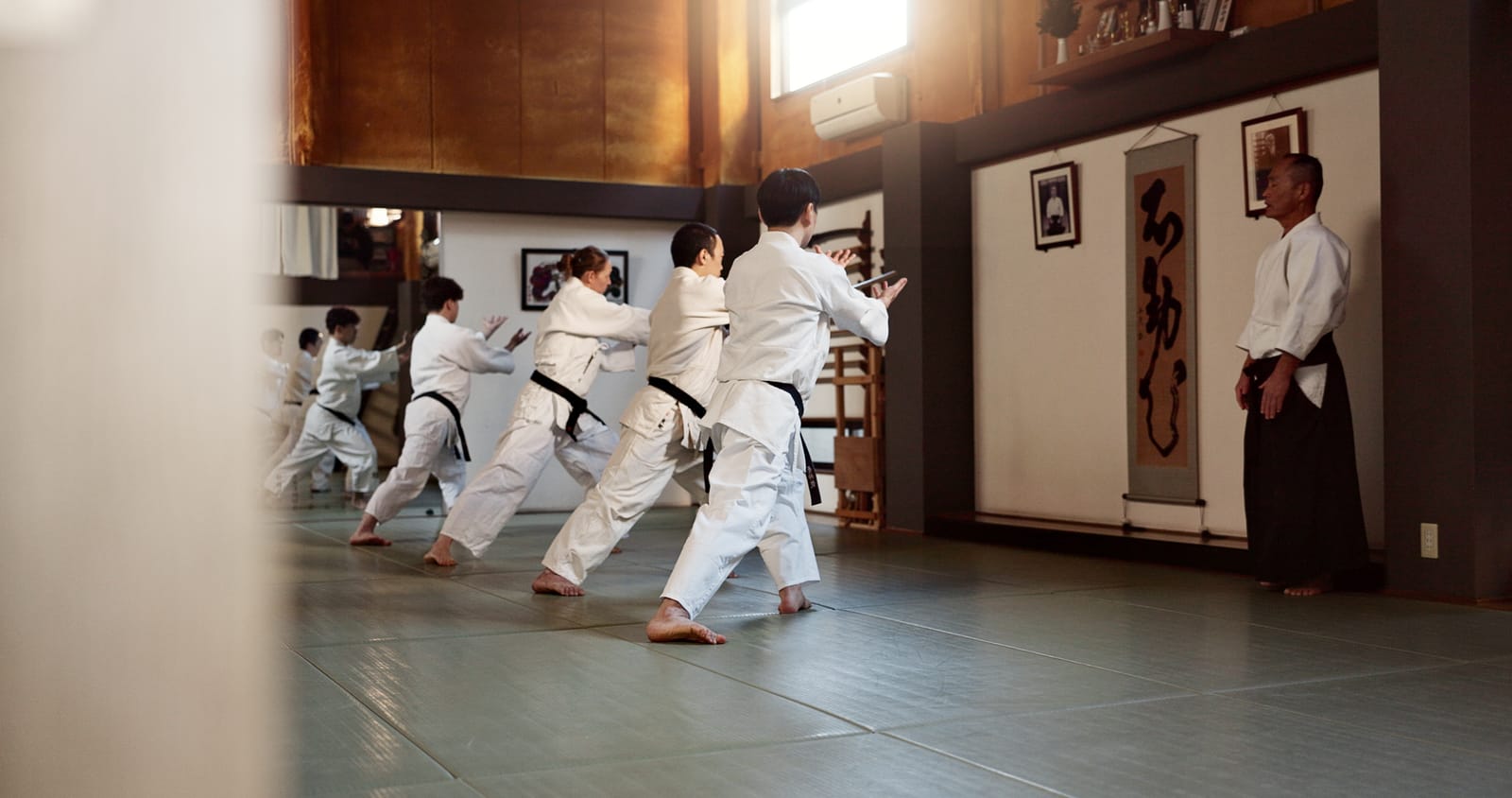
Karate is the most structured of the three. Classes move through fundamentals in lines, kata (choreographed sequences), and controlled partner work, with a belt curriculum marking the path. The dojo culture — bowing, titles, etiquette — is a feature, not decoration: it produces focused rooms where children and adults can train seriously side by side. Intensity varies more between karate schools than in most arts, so the specific dojo matters enormously; a Kyokushin club and a family-oriented Shotokan school are different worlds.
Choose Karate if you value structure and measurable progression, are enrolling as a family, or want a discipline-first environment over a fight-first one.
The comparison that actually matters
- Contact comfort: BJJ is full resistance with no strikes; Muay Thai has strikes with controlled sparring; Karate ranges from light-touch to knockdown depending on style.
- Time to feeling competent: Muay Thai fastest, Karate steady and staged, BJJ slowest and deepest.
- Body wear: all three are demanding; BJJ is heavy on fingers and neck, Muay Thai on shins, Karate on knees and hips. A good coach manages all of it.
- Room culture: visit and feel it. The art sets the training; the coach sets the culture.
Test all three for the price of nothing
1,671 studios on InquireMap advertise a free trial class. Book one BJJ, one Muay Thai, and one Karate trial in the same two weeks and the decision usually makes itself — one room will pull you back. Start on the disciplines page, pick your city, and go shake three sets of hands.